


Bring Your Culture to the Wine World

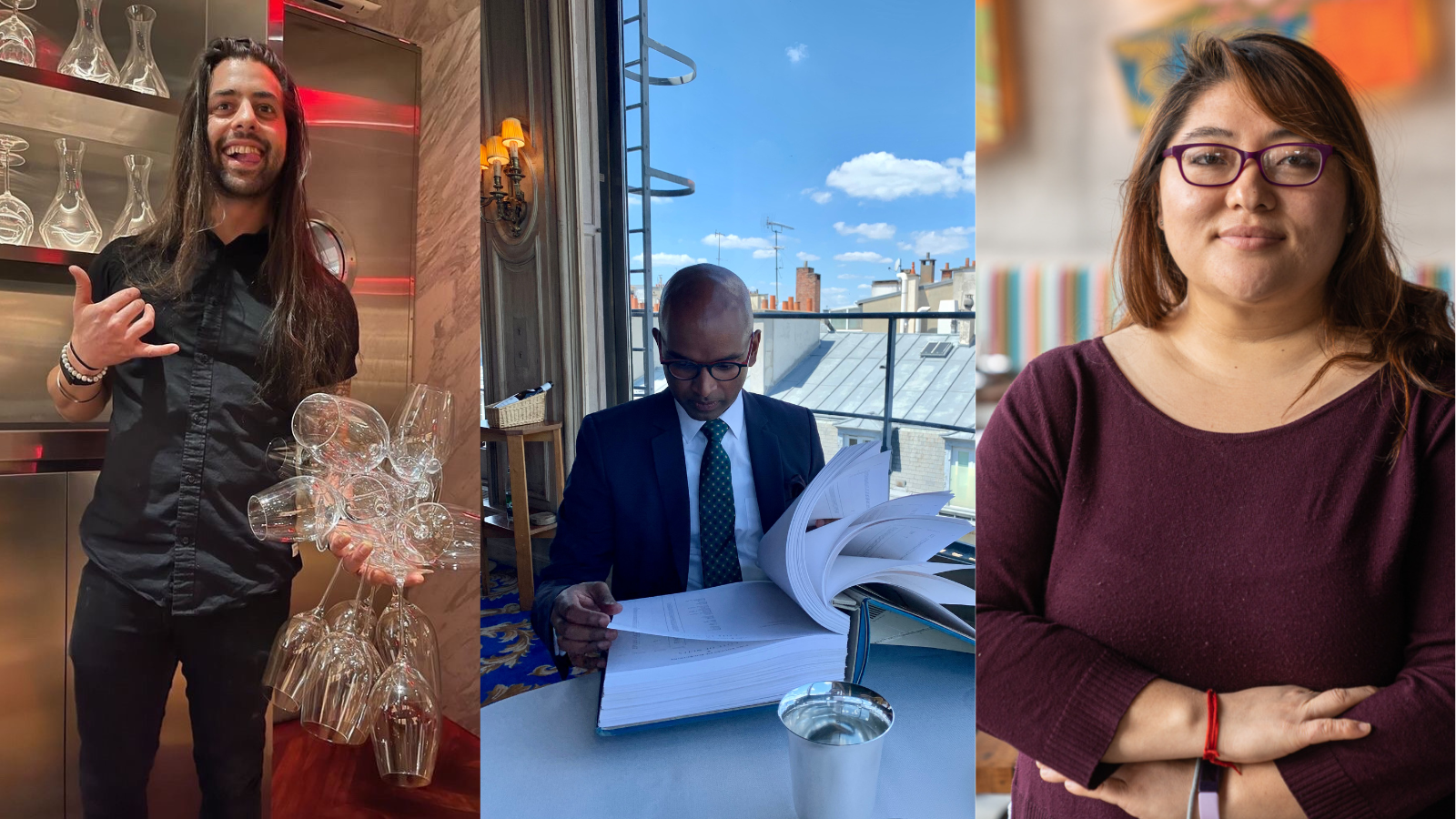

Portraits of Three Asian American Leaders in Wine
One evening not so long ago, my friends and I gathered for dinner at Dhamaka, a hotspot on the Lower East side of Manhattan I’d come to know for its unapologetic celebration of heat and spice. The menu was flooded with dishes that lit up my hippocampus and tingled the back of my palate — korma, biryani, nihari — all part of my mother’s culinary repertoire and my childhood visits to family in Karachi, Pakistan. My eyes widened as I scanned the wine list and took in its breadth — German Rieslings, Lambrusco-style fizz from the Finger Lakes, a Chilean Carménère. It was clear that whoever built this wine program respected the food.
Wine lists at South Asian restaurants often feel like an afterthought. It’s a cuisine with flavors declared much too bold — the spice, the acidity — and fickle to pair with wine. This line of thinking perpetuates a gate-keeping paradigm in the wine world: Just like there are certain foods designated as optimal for wine pairing, the industry itself is led by a woefully homogeneous group, unrepresentative of its multicultural wine-loving constituents.
Over the course of the next few months, I set out to meet my representatives: Asian, South Asian, and multiracial leaders in all sectors of wine, curious about how their backgrounds may bear influence on the industry. I spoke to winemakers, distributors, sommeliers, and founders and discovered a throughline in every conversation — by bringing their full selves to the job, they engender a far better industry culture, not just for the up-and-coming young gun somm but for the consumer, the one who takes great pleasure in drinking wine. It is important to remember that our country was predicated on an open invitation for all to come here and build a life. These three selected portraits expand this ethos: bring your personal culture here too. We’re better for it.
Tina Dolker
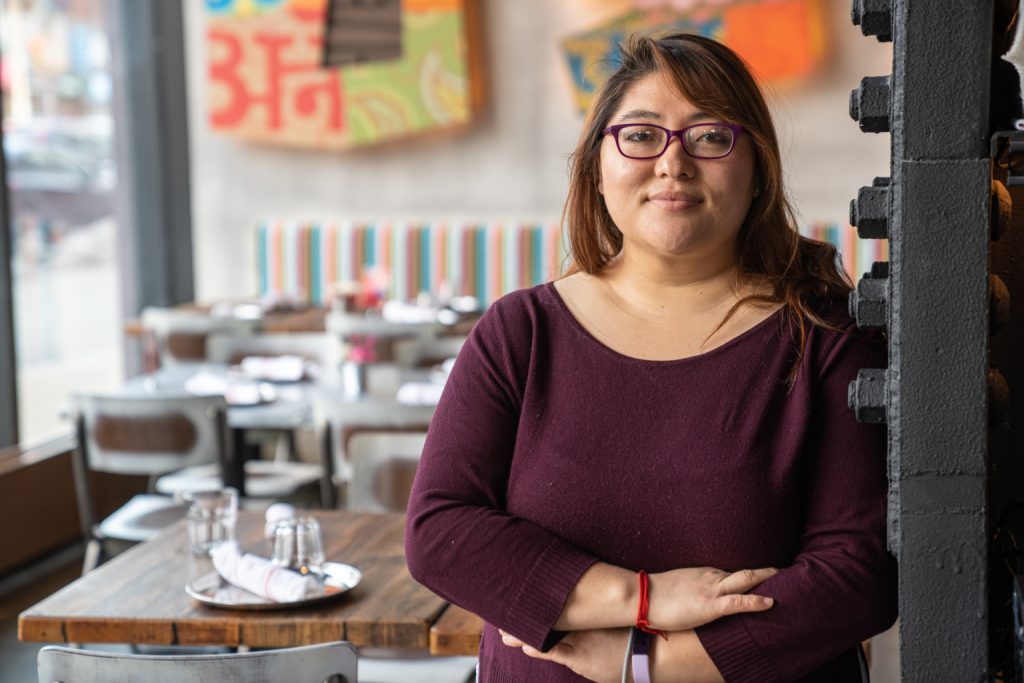
Dhamaka’s lip-smacking wine list is curated in part by Tina Dolker, the restaurant’s general manager. Her upbeat nature shimmers as she walks across the floor, checking in with staff and greeting eager guests who wait at bay for the restaurant to open. Dolker is originally from Tibet, went to boarding school in India, and immigrated as a teenager to New York City with her family. Prospect Heights International High School serves newcomer immigrant students, many of whom, as Dolker recalls, were refugees. “I was in ESL class for about two hours every day and would come home and try to memorize the dictionary!”
During those years, her father opened a Himalayan buffet-style restaurant in Queens, her first taste of the food service world. Hospitality, however, is rooted in her mother culture. “Back home when you refer to your neighbor, this person might be at least a 30-minute walk away.,” she says. “These ‘neighbors’ would pass by, people you barely knew, but my mom would invite them in, feed them, pack them food. When it was late, it was normal for us to let them stay overnight and send them off with more food the next day.”
After majoring in Global Studies at Warren Wilson College, she has musings of social work but an allergy to spreadsheets, and desk jobs propelled her into the restaurant and wine world. While in India, she missed Tibet, and once in the United States, she missed India. She went on to work for several Indian restaurants, including Unapologetic Foods’ Rahi. By early 2021, she was part of Dhamaka’s opening team, maneuvering through a Pandemic. Her passion for wine was nurtured by her boss, Chef Chintan Pandya. “He asked me one day: ‘What’s your next plan? What do you want to do?’” she recalls. “And I said ‘I really want to [formally] learn about wine.’”
She’s recently completed level three coursework through the Wine and Spirit Education Trust (WSET) at The International Wine Center and tasted her way through trips to Champagne and Portugal. Her passion for wine reveals a curiosity for the world and the ability to relate to others. “I love learning new things, talking to new people,” she says. “Sometimes people try to hide who they are or not really talk about their culture. But, don’t be afraid of who you are.” On the horizons for Tina one day? The dream of opening her own wine bar. One that will serve Tibetan cuisine.
Mackenzie Khosla
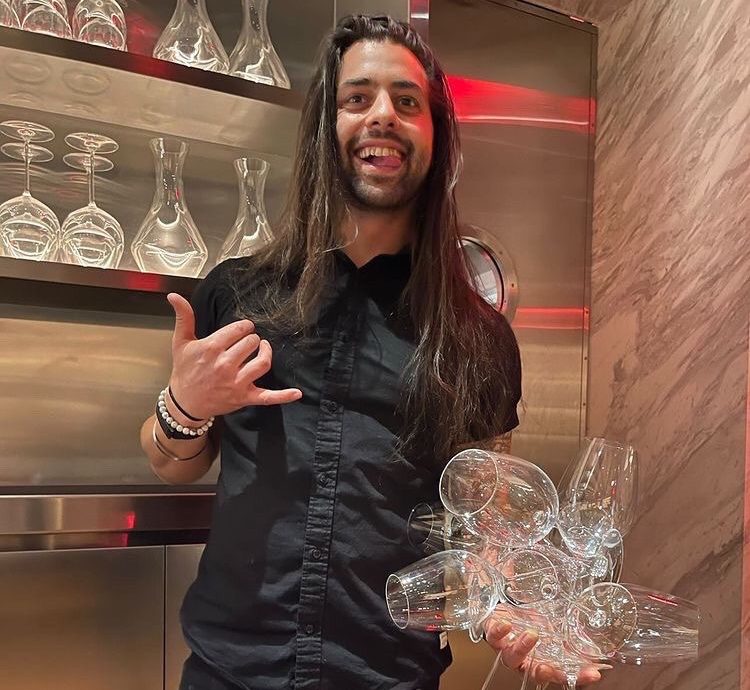
“One of the things I enjoy is not looking like the person you[‘d] expect to be walking up to the table. The double take. A brown dude with long hair and tattoos [approaches] and you’re like ‘Wait, wait hold on, I was expecting a blonde girl in a pantsuit. Who are you?’.” That’s Mackenzie Khosla, a New York City transplant by way of Northern Virginia, the son of an Irish-American mother and Indian father. While working the floor as a sommelier, the conspicuous pairing of his multiracial identity, first name, and career choice often prompts amusing reactions from diners.
Khosla’s career trajectory in wine began as pure happenstance — he was a college student who needed a job and applied for an opening at Panorama. “I didn’t know anything about wine but they needed a body.” Unbeknownst to him, the Philadelphia wine bar has one of the largest wine programs on the East Coast and once held the Guinness World Record for its wine inventory. William Ecclestone, the general manager, became his mentor. “He interviewed me and my interview was not very good,” Khosla recalls. “He later admitted to me, ‘Yeah, I wasn’t even sure if I wanted you to food-run, but I needed somebody.’ I would sit down at the bar after work, he would put [wines] in front of me, and I would taste with him. And the more I learned, the more I fell in love with it. I actually ended up dropping out of Drexel to pursue getting my CMS.”
He’s drawn to the complexity of wine and the never-ending pursuit of knowledge it invites. “I’ve always been interested in things that are difficult to understand unless you spend time on them. I was a business student in college, and it bored me to death. So I switched to psychology, because people are interesting. And then I found wine and thought, ‘I think wine might be even more interesting than people.’”
After slinging Champagne for Union Square Hospitality’s MARTA, he made his way to Dinex Group’s Bar Boulud and Boulud Sud before landing at media darling Pasquale Jones.* Khosla cut his teeth as a sommelier, but people are his forte too. He has a knack for disarming the same diners who do the double take. “I don’t want people to come in and sit down and be intimidated,” he says. “All you need to know is what color and how much you want to spend, and I’ll do the legwork. I want the experience to be approachable.”
His approach is a welcomed departure from the self-serious “Is that freshly cut garden hose?” SOMM caricature, and he democratizes wine tasting too. Anyone is free to follow their inclinations and discover what they like. “There are somms who have their tie too tight and don’t understand why people don’t want to have wine the way they do,” he laments. “If somebody wants to put ice in their wine, I’ll get you a different glass, because this one will break, but I’ll get you the other glass and I’ll get you the ice. Listen, we all don’t have to like the same things.”
Growing up mixed race can tether you between different languages, religions, and cultures. It forces you to adapt quickly as you hop between the two. Khosla is naturally comfortable with this pressure to operate with chameleon-like flexibility both as an individual and on the restaurant floor. “We’re professional code switchers. We’ve had to do it since we were little kids. Growing up, it was like, okay what kind of grandchild am I at my waspy Irish grandparents’ house versus my traditional Indian grandparents’ house? I think that’s a whole lot of being on a restaurant floor: assuming you’re code switching all night. A great server is exactly what their table needs them to be.” Human interaction is at the center of his wine career, and he loves driving the experience of a restaurant, planning one day to become service director. “Your job is to truly be the maestro, and I think I could be good at that.”
*Following this interview, Khosla left Pasquale Jones and is now the Wine Director and Partner at Field Guide, opening this fall.
Santosh Varghese
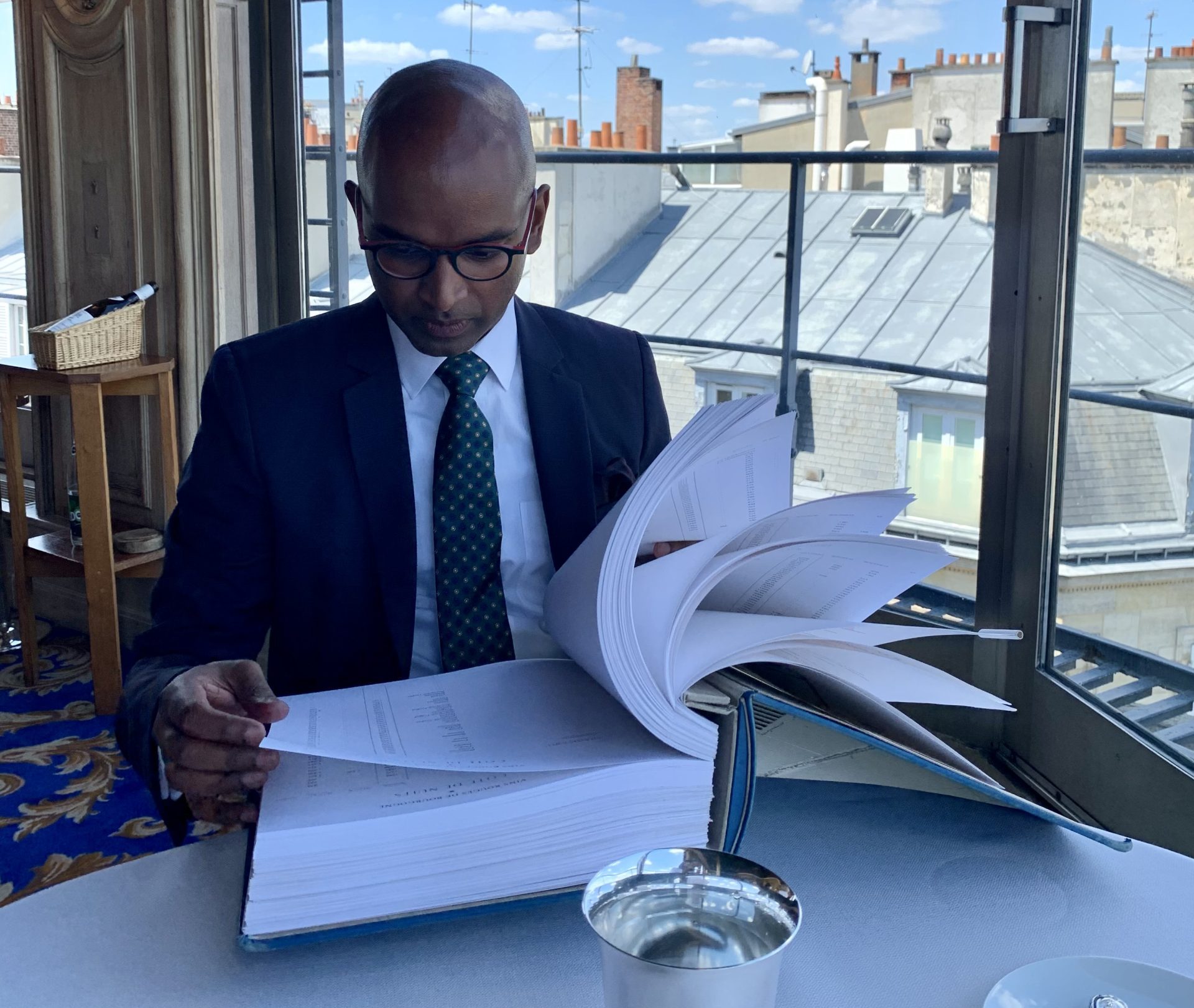
Santosh Varghese grew up in Westchester as the son of South Indian parents who immigrated in the 1970s. Wine wasn’t necessarily at the center of their daily life, but food was. “There are people who are obsessed with food, and there’s my family who are in a completely different category,” he says, noting that when one meal ended, the question of what to eat for the next meal began. His parents worked around the clock, but, regardless of who came home at what time, it was when they were together that they shared dinner as a family. There’s an obvious close, warm bond Varghese shares with his parents and his two sisters, and when he ultimately decided to work in the wine industry, it was with their full blessing.
Varghese’s career in fine wine underscores the idea that, no matter your trade, it is possible to make a positive impact on the lives of colleagues, constituents, and the community. “My intention – and it’s still in the back of my mind – is human rights work and having a social impact,” he says. After majoring in Political Science and African Studies at SUNY Binghamton his first job out of college was with the Vera Institute of Justice, an organization dedicated to ending overcriminalization and mass incarceration of people of color, immigrants, and people experiencing poverty. His initial projects included investigating New York City’s foster care system in the 80’s and 90’s, addressing allegations that NYC was targeting black and hispanic children for clinical trials during the AIDs epidemic. “The work was in line with the kind of work I wanted to do, but very emotionally tolling,” he says. After an opportunity in investment banking took him abroad, his curiosity of wine grew while on a short sabbatical in Paris. “The South Asian in me knew that if you want to do this, you need to get some sort of education, some training, some knowledge.” He ultimately enrolled in the Wine and Beverage Program at Culinary Institute of America’s St. Helena campus. “I had to really talk my way into that program,” he remembers. “[At the time] it was really geared towards people who have experience in the wine industry, looking to further their career in the wine world.”
After working for Zachys auction house, Varghese worked in brand management for VINTUS, one of the leading fine wine importers in the United States. His primary jurisdiction is the acclaimed Mendozan estate Finca Decero. “They’re doing everything from providing housing for some of the people who work in the vineyards, providing real career opportunities and pathways for staff, mentorship through the internal team to the local community, and donating to local hospitals and schools,” he says. In addition, Santosh currently sits on the board of The Roots Fund, a nonprofit founded in 2020 dedicated to boosting wine education and career opportunities for minorities in the wine industry. “These are not one-off programs. It remind[s] me that I don’t need to specifically work in a nonprofit to do social justice work.”