


In Defense of Drinking, Revisited


Pleasure, Risk, and the Radical Act of Raising a Glass.
Fun fact about me: I was once a guest on Dr. Phil.
No, there were no “who’s the father” reveals or confrontations with in-laws. Instead, it was a confrontation of another sort.
A few years ago, I wrote a piece titled “In Defense of Drinking,” in which I unpacked my frustrations with the growing sobriety crusader movement and its sometimes sanctimonious overtones.
Well, this article caught the attention of Dr. Phil’s producers who reached out to me as the counter voice on a segment they were doing in response to Susan D. Stuart’s launch of the book “On the Rocks: Straight Talk about Women and Drinking,” which addressed the topic of women’s increased alcohol consumption since 2000.
I met with the producers at length, reviewed talking points and interview questions with them, sent video footage and photos of me in my element – educating others about wine, and interacting with it in a professional context. Turns out none of that was necessary.
In the ultimate bait-and-switch, I went from being a panelist and the thoughtful voice of moderation in a conversation about women’s relationship with alcohol to, simply, “Woman Who Drinks.”
Fifteen years as an outspoken voice in the adult beverage industry and they didn’t even use my name.
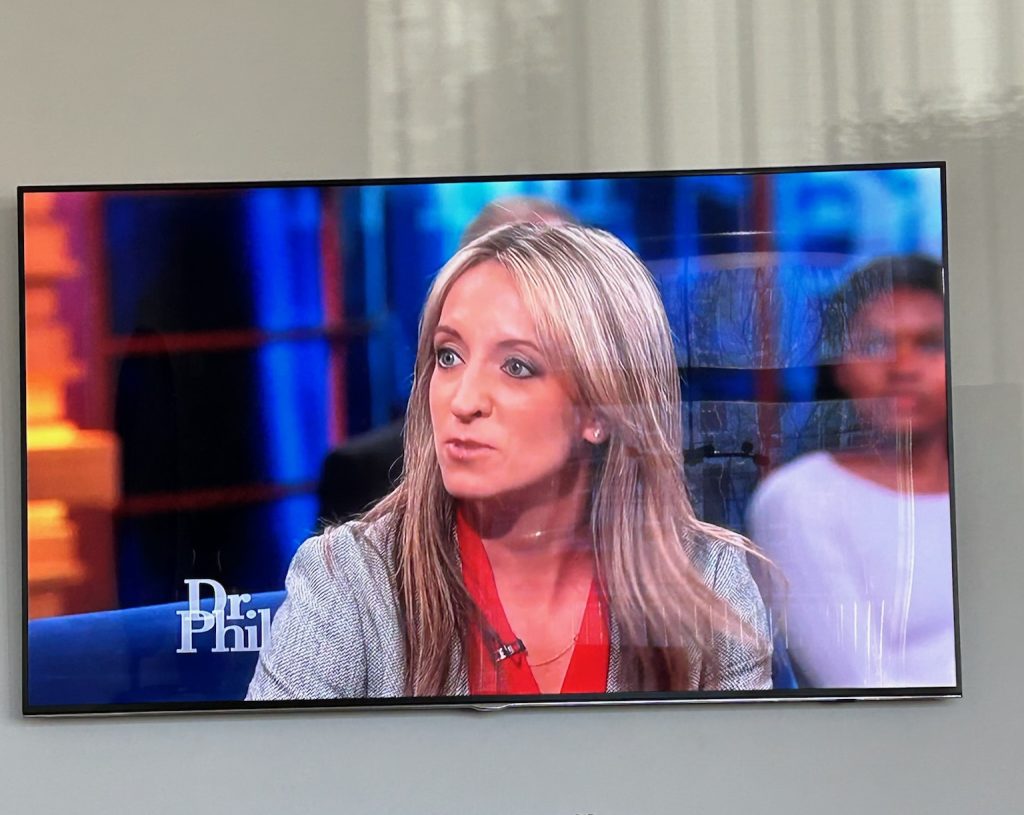
I sat and listened to several women share their path to sobriety and cringed as terms like “POISON” and “WINE MOM” were volleyed back and forth like shuttlecocks. I barely got a word in, clearly the pariah in this context. But this wasn’t an AA meeting. This was supposed to be an open dialogue about the meaning of moderation, understanding guidelines surrounding alcohol and—I thought—an honest conversation about the root cause of why women were perhaps drinking more these days, examining the immense pressures on the modern woman rather than blaming the bottle (or the drinker).
It’s a Wino’s Life For Me
Alcohol has always been an incendiary topic. But lately, it feels like enjoying a glass of wine has become a radical act. The public conversation around alcohol—wine included—has taken a turn for the dire, steeped in zero-tolerance rhetoric and framed by what often amounts to nutritional nihilism. “Alcohol causes cancer!” the headlines scream. “No amount is safe!” You’d be forgiven for thinking that the mere act of swirling a glass of Pinot has become an act of self-destruction.
The truth is, I’m not interested in living forever if it means never again sipping a perfect glass of Barolo. Never cracking the screwcap on a chilled Sauvignon Blanc while cooking dinner for my family. Never clinking glasses with friends over shared laughs, plates piled high with food to pair. Never popping that bottle of bubbly to celebrate something big or nothing at all.
There. I said it. You would have to pry the corkscrew from my cold, dead hands to get me to give up wine without a concrete medical diagnosis because the current headlines aren’t going to do it for me. If that makes me some kind of addict, then fine. I’m addicted to the joy of living fully—and the small, calculated risks I take to protect it.
In a world increasingly overrun with dumpster fire headlines—climate collapse, AI-induced existential dread, $30 cartons of eggs, actual wars—it’s wild that one of the biggest sources of moral panic right now is…a glass of wine.
And yet, the fearmongering continues—this time under the banner of science. This year, the World Health Organization published a statement declaring that “no level of alcohol consumption is safe for our health.” That line ricocheted through the press like a grenade, stripped of caveats, context, and clarity. No mention of how dosage, frequency, and lifestyle all matter. No conversation surrounding relative versus absolute risk. No space for the role moderate alcohol consumption can play in culture, community, and well-being. Just fear.
Tom Wark put it best in a recent must-read essay on his Substack. “If you read the NY Times article, or any other article declaring alcohol increases your risk of cancer, you’ll probably notice it is never noted how much the risk of cancer increases if you drink,” he writes. “There’s a reason they don’t mention this. The answer is hardly any at all.”
But the headlines don’t tell you that. They tell you to panic.
I’m very pro-science. I champion data when it’s presented properly and without the bias that comes with an inherent conflict of interest. I also respect the right to live a life that includes pleasure for pleasure’s sake. A life where joy isn’t immediately subjected to a cost-benefit analysis. We’ve become so obsessed with clean living that we’ve forgotten the value of living well.
Sharing, Pairing, and Deeply Caring
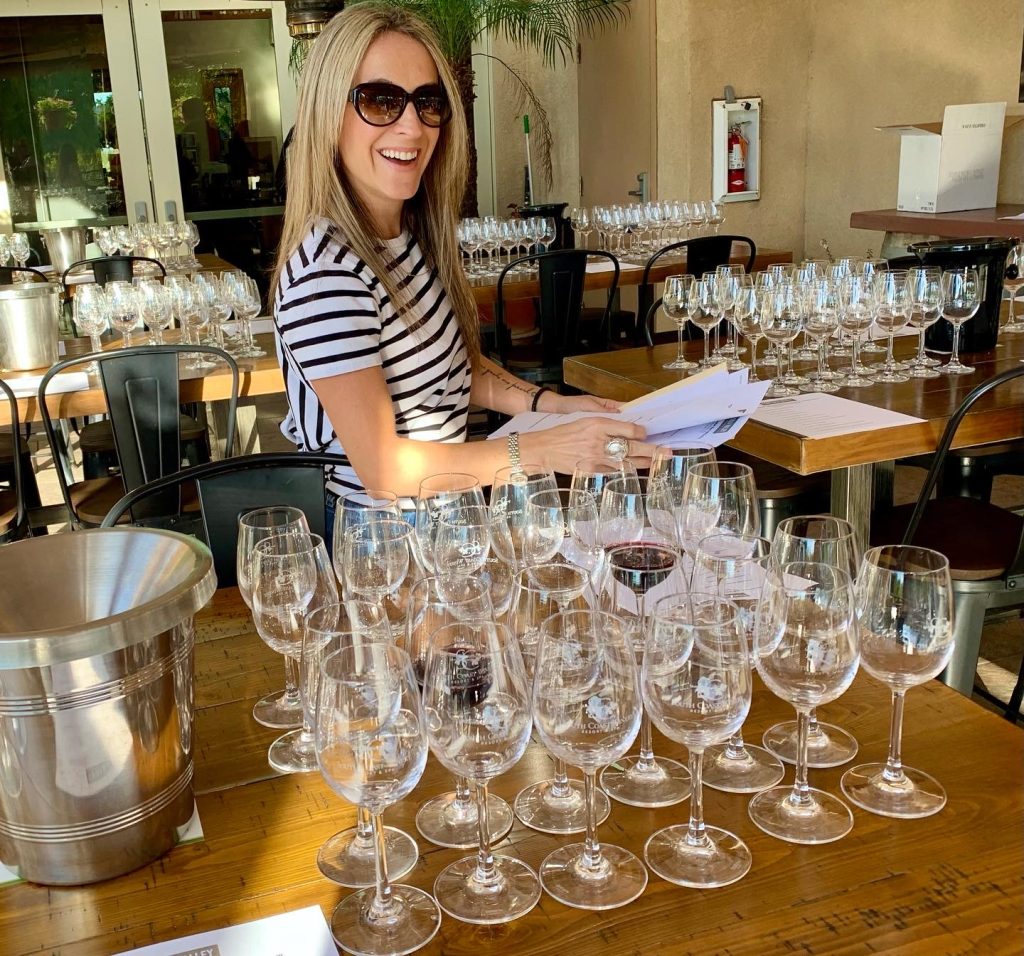
Wine has been my career, yes—but, more than that, it’s been part of my life. I’ve drunk to engagements and breakups, overindulged with besties and forged new friendships over shared sips, stood in vineyards with farmers whose hands tell stories that never make it into lab reports. Wine is agriculture. It’s art. It’s heritage. It’s the stuff of gathering and giving. It is, quite literally, the fruit of labor—and the reward for it.
I applaud those in the industry banding together to combat all this negative wine PR, with programs like Napa Valley Vintners’ “Why Wine” campaign and Sonoma County Vintners’ “Wine Is Us” initiative, as well as The Wine Institute’s leadership in shaping public policy. Industry vets Karen MacNeil, Kimberly Noelle Charles, and Gino Colangelo’s ambitious Share & Pair Sundays and Come Over October campaigns have been equally loud and serve not as industry talking points, but powerful reminders that the most important parts of wine culture are rooted in connection. It’s refreshing to see our industry collaborate and take meaningful action rather than sticking our heads in the sand as we’ve done in the past. We really can’t afford to now.
These initiatives encourage us to move beyond sterile metrics and remember why wine has endured in human life for thousands of years: it’s meant to be shared. It’s meant to be paired—with food, with people, with conversation, with pauses that punctuate otherwise chaotic days.
The idea behind Share & Pair Sundays or any of these programs isn’t about excess or escapism. It’s about rediscovering the ritual of joy. It’s about sitting down at the table and making time for flavor, laughter, stories. It’s about shifting the narrative from fear to presence.
But let’s not stop there. Let’s get louder. Because even these efforts—including this very piece—are directed to our own community and thus preaching to the choir. We don’t need you and me to understand that wine is about more than a substance we put in our bodies; we need all those folks for whom wine is simply a beverage not a lifestyle, who are sitting at home reading the headlines and now assuming one sip will land them in the ER to. But if someone offers me a spot on The Today Show to explain this all, I’m happy to be the mouthpiece for our cause. As long as they use my name this time.
While joyful storytelling is essential—so is truth-telling. If we want wine to remain culturally relevant and commercially viable, we need to defend it not just with touchy-feely notions of community, but with facts, science, and unapologetic honesty. Our industry has been so afraid of touching the untouchable, terrified that any mention of wine and health in the same breath automatically means we are saying alcohol is healthy, thereby putting a target on our backs for litigation or worse. But this industry has weathered centuries of change, wars, drought, and plagues, not to mention 13 years of Prohibition. Since when do we back down from a fight so easily?
The industry must be willing to meet misinformation with information, misleading science with contextualized science. We need to challenge the absolutism, the soundbites, the pseudo-scientific panic. We need to be unafraid to say: this is a targeted attack on our culture, our livelihood, and our intelligence. And here is why the current presentation of the science shows that.
Let’s pair our joy with backbone. Let’s pour generously and speak loudly. Let’s raise a glass and raise the bar for how we advocate for this thing we love. Because if everything is going to hell in a handbasket anyway, can we at least agree that the basket should come with a bottle of something lovely?
Let us share. Let us pair. Let us Fight. And let us stop pretending that perfection is the goal and start remembering that pleasure—and struggle—are birthrights. Because, as far as I’m concerned, a life that doesn’t include the simple joy of a beautiful glass of wine, no matter how risk-free, sounds pretty dismal to me.